LINK TO NATIONAL FIRE RADIO PODCAST WITH JEREMY DONCH 5-16-24
Training with Anthony Avillo: Let there be Light!
It is fundamentally safer to operate with lights on than it is to work when they are off. No one will argue that. When we are doing overhaul and/or operating on a roof, it is critical that lighting the area must be part of the overall operational plan. In fact, when operating on a roof, not only should we light up the area of operation, but we should also ensure there are lights are at all areas of egress, especially the aerial. Aerial spotlights must be used as a beacon for egress. Dark roofs are dangerous and allowing them to remain dark is unacceptable.
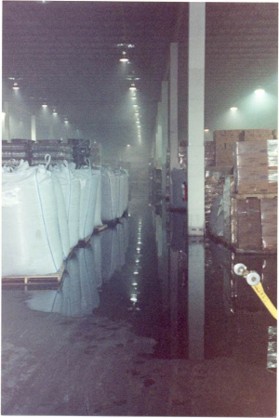
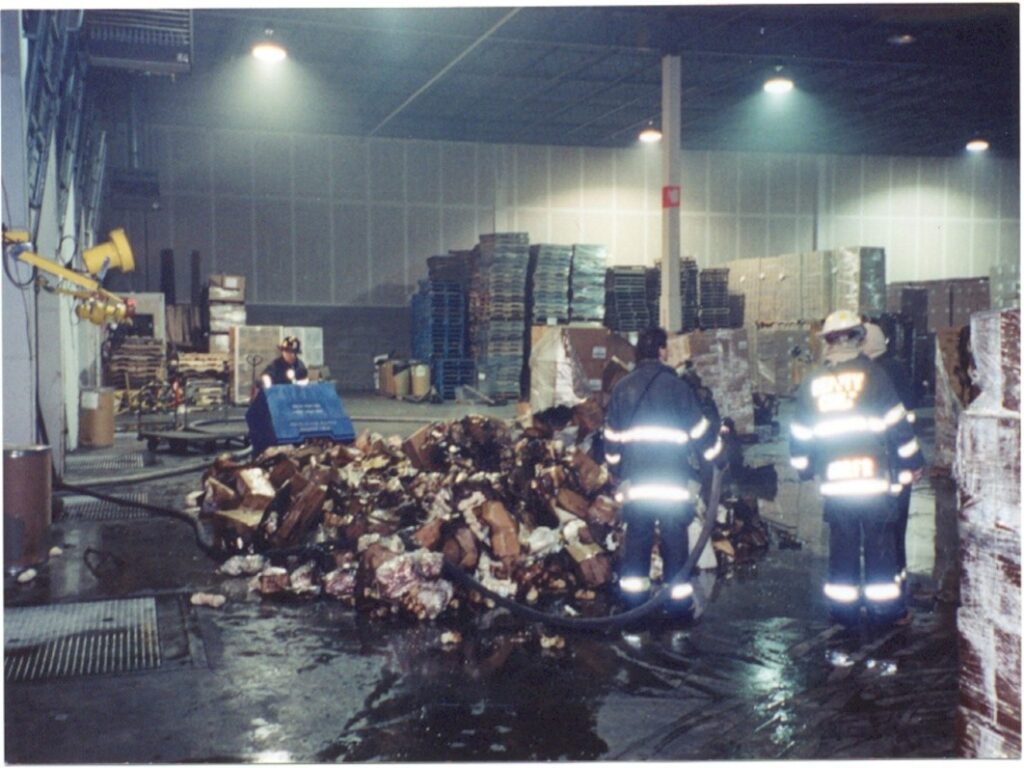
Using lights is also an excellent tactic when operating inside a structure, especially a large area structure. In a small area building such as a residential structure, we might not be able to turn on the lights during operations, but we might be able to as the incident stabilizes…maybe. In a large area structure, turning on the lights, especially in areas of egress can make the operation that much easier…and safer. The first two photos show a warehouse where we had a nighttime fire that was being controlled by the sprinklers. We left the lights off in the area of the fire, but we turned them on in the egress areas (and eventually as seen in the first picture) in most of the rest of the warehouse. The second picture was where we dumped burnt and still smoldering debris to be further extinguished and overhauled. It was a really cold night, so we worked near the egress doors where we had room and an easier stretch for small diameter overhaul lines. We made sure the lights were turned on in this area too. The point to be made is that this is an excellent option that should be carefully considered and accomplished with the assistance of building personnel. They know the building best and will know how to operate the correct lights and maybe HVAC systems to exhaust smoke if needed.
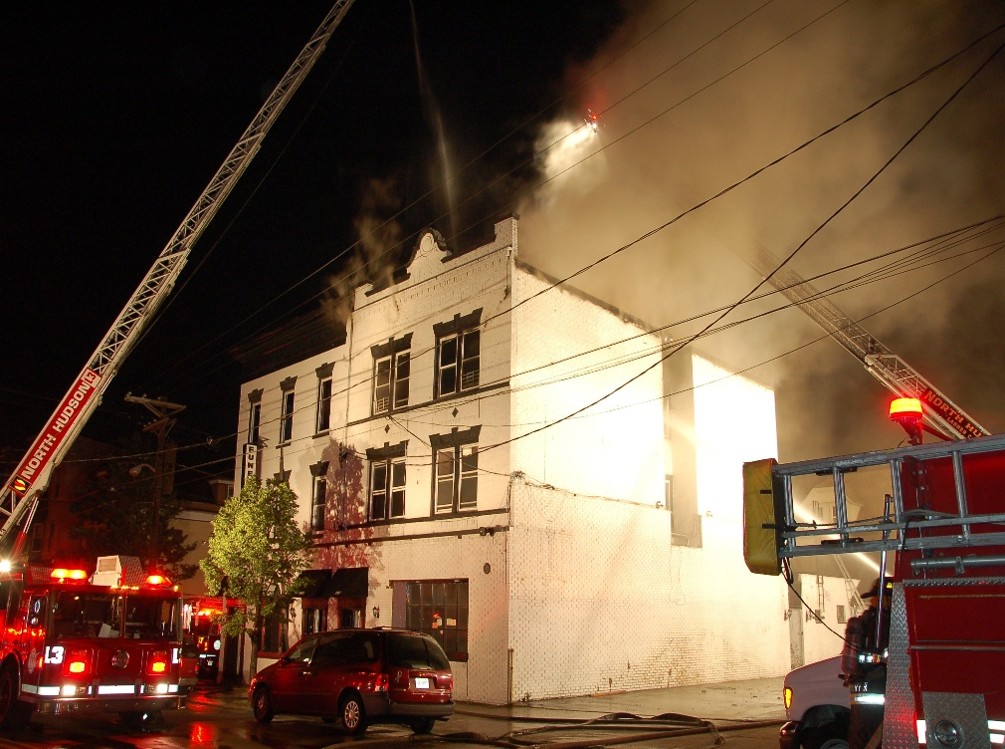
The third photo shows a vacant funeral home where we had several fires prior to demolition. You can see that the building is well lit up. This is absolutely necessary and should be a routine part of the operation. This was a defensive operation. When we opened the ladder pipe on the A side of the building, the stream made contact with the primary lines and caused the whole block to go dark. This took care of the electrical danger…or so we thought. When the utility company arrived and assessed the situation, they told us that we only knocked out one of the phases and other two were still live. Lesson learned. Even if the lights on the block do go dark, it does not mean that there is no danger. Continue to treat the powerlines as live until it is confirmed by the utility that the power is confirmed off.
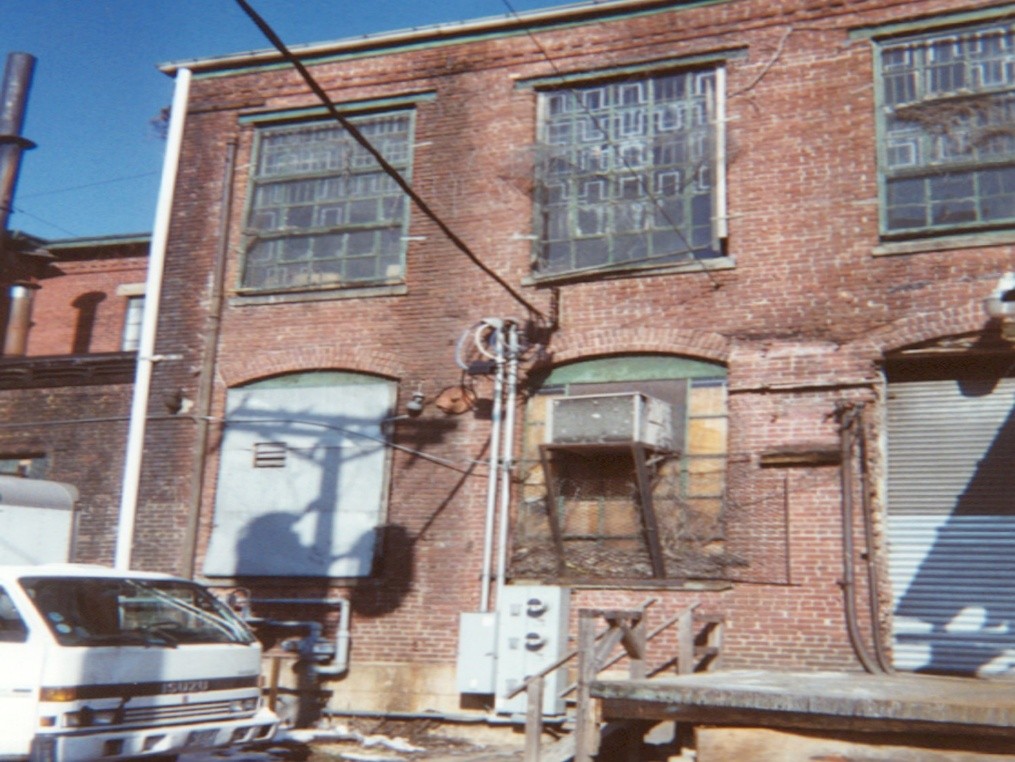
The fourth photo shows another lesson learned. This was when I was a Ladder Captain. We were operating in the cellar of this building trying to locate the fire. We were using a lifeline and eventually found the fire, which sprinklers were holding in check but had not fully extinguished. After the fire was out and the smoke cleared, we realized we had been operating about ten feet from a wall full of live buss bars—not good. Unfortunately, we did not enter from that side, but it is a useful size-up point if you are ordered to shut off the electric service or are entering for search or another operation. Find the service connection. In many cases, the area you need to access to shut off the power will be on the wall directly below it. This is not guaranteed because there are always exceptions, but it is a strong indicator of where to find the disconnects. In this case, they were on the wall directly below the exterior connection. This also applies to residential structures, multiple dwellings, and many other buildings. Do your homework and develop solid pre-fire street intelligence so you can make sound decisions during the incident. Always look for clues that make the job easier and safer.
Quotable Quote: Excellence is not a single act, but a recurring habit.
================================================================================================
Rehab and Accountability
On the fireground, there are only three places a company should be: operating, in staging near the Command Post, or in Rehab. These are known as company status. I have said before that the best accountability process is disciplined companies following SOPs and operating in a strong command structure. Rehab control is critical in making or breaking your ability to keep the troops managed and in a solid rotation between staging and operating. We had a major fire in North Hudson back when I was on Da Job and things had not gone well. One of the reasons was because rehab had not been set up well, in fact, it was a mess. It was one of the many lessons we learned from that fire and it changed the way we looked at setting up and running rehab. It seemed rehab was not well located or organized at the incident causing a delay and disconnect in the rotation of companies from rehab back to the Command Post. We found that if you can make your Rehab Division accountability-friendly and location-friendly, it all works better. At the fire in question, it also had to do with a CP that could have been located better. The fire was on a main street. On the cross-street corner, there was a bank that was empty. If we had positioned the Command Post in the intersection and located the rehab area in the empty bank, anyone going to rehab or leaving rehab would have to pass (and check in with) the CP.
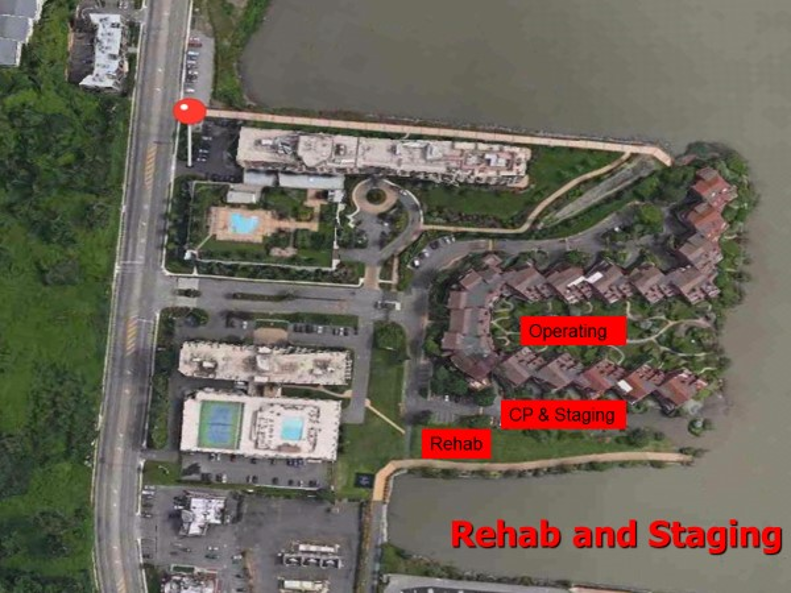
Some time later, I had a 6-alarm fire at the Roc Harbor complex in North Bergen. The CP & staging / rehab / operating area were set up to be as accountability friendly as I could get it to be. Note that, as theorized above, the path from area of operations to the CP to the Rehab Division and back were set up as shown in the photo below and proved to be an efficient way in which to get firefighters the rest they need and to account for them as well. Pretty cool!
We also used a Rehab board similar to the one shown below. It is used at the CP to help monitor the entry and “back to the CP” times for those companies in Rehab. This could be used as a form or could be set up on a dry erase board for ease of tracking. Note the clock at the top of the board. The premise is that each company reporting to Rehab is given 25 minutes to take care of their rehab needs. There is an arrival time in the first box, a 20-minute notify box to remind the company that they are due back at the CP in 5 minutes, a check box to document that the call was made that they have 5 minutes to come back to the CP, a back at the CP time box, and a complete checkbox. The “In Rehab”, Notify” and “Back at CP” boxes are filled in as soon as the company goes from the CP to Rehab. Following the clock tells the timekeeper when to make the notifications. For instance, E5 enters rehab at 1705, are notified after 20 minutes that they need to be back at the CP at 1725 and are expected back at 1730. This was completed as evidenced by the two checkmarks next to “notify” and in the “Complete” box.
As an example of a company still in rehab, note that R1 went in at 1755. They were notified to be back at 1815 (20 minutes) and are due back at 1820. Note the complete box has not been checked as it is only 1817 and they are not due back at the CP for another 3 minutes. As another example, note L2 has gone to rehab at 1805. They are due to be notified at 1825 to be back at 1830. As it is only 1817, the notification to be back in five minutes is not due for eight more minutes, at 1825.
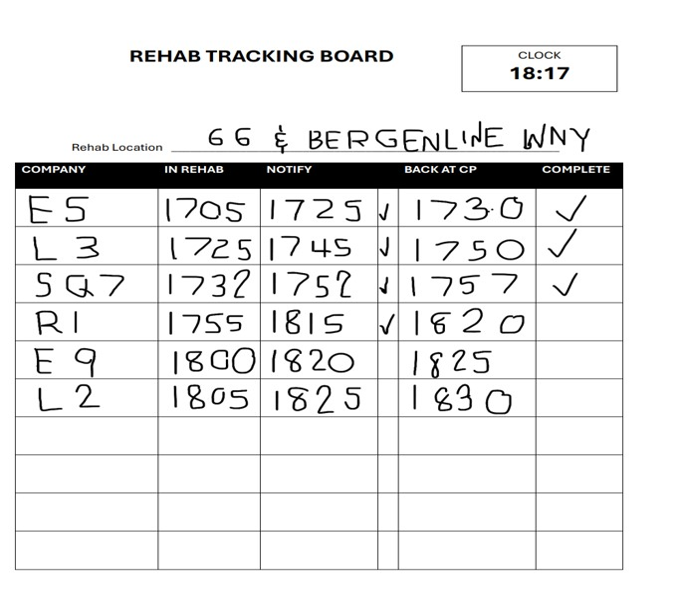
This is a solid method of tracking rehab. It depends, of course, on the discipline of the company to comply with the company status process. It is not fun to have to guess your company status.
=============================================================================
Changing Geography
Let’s talk about another type of changing geography, specifically the groundscraper. These are being built everywhere. They are sticking them in every possible place in the urban areas but if you live anywhere near a railroad station in New Jersey, there is a good chance that there are some ground scrapers going up near you. I like to call them human storage bins. There are many issues that we will have to contend with when operating in these buildings. I will cover some things, but I will also ask questions that you need to have answered before you can confidently respond to fires in these buildings because it is not a matter of if; it is a matter of when. These buildings can be quite expansive. Now put about 5 or 6 of them together and the configuration concern grows exponentially. There have been many cases of these buildings burning right to the ground while under construction in New Jersey. There was also the conflagration in Edgewater that due to the time of day it started, it did not cost hundreds of lives. If that had happened in the middle of the night, I shudder to think how many people would have been killed.
Response Times
This issue will apply mostly to uber-urban areas. Streets where a few private dwellings are being bought up by developers are now seeing larger multiple dwellings being built that have parking beneath the building. What was once one or two parking spots is now parking for dozens of cars. Multiply this by the many buildings that are going up and you can see how the traffic problem which will affect response times has been created.
Here are some questions that need to be answered – not by me, but by you and your department:
- First and foremost, are the voids sprinklered?
- Is there any way to contact all of the residents from a central communications point?
- What areas will be most difficult to make rescues from?
- Where are the areas of access? How many ways into and out of the complex / building do we have?
- Are there cul-de-sacs where we cannot effectively position apparatus?
- Where are the stairwells and how many are there? These will be the only place in the building living areas that won’t burn – get the residents there as quickly as possible.
- Can we use an aerial device and if not, where do we need to bring ground ladders for rescue?
- How long will the stretch be to reach the most remote areas? Don’t count on your pre-connect. What hose layout will best serve us here?
- Are all of the apartments one floor only or are there apartments with open stairwells inside?
- Where can we lock out the elevators? They are not needed nor should they be used for fire service operations in these buildings.
- Are there any gated areas and/or forcible entry concerns?
- Where are areas of refuge? Are there monitored communication stations there?
- Is there enough water for the heat release rate as seen in the second picture? What was on the property before this human storage bin was built? Has the water supply been updated?
- Do you have enough people to fight this fire? These incidents will not only tax your resources but the resources of your mutual aid as well.
- Where are the standpipe and sprinkler connections? How close are they to the hydrant?
- Do we have any defendable spaces or is the attic and floor voids completely open across the entire structure. Captain Bill Gustin called this construction “horizontal balloon frame”. Fire can spread laterally a long way.
- Do we have the ability to reach all areas of the structure from the standpipe connection? Is hoisting an alternative for hose stretching?
- Do all areas around the building support the weight of apparatus?
- Are all areas accessible?
- Do our radios work in all areas of the building?
- Is there parking underneath the building or are there stores, or both? Both will come with their own unique issues. Can you say lithium ion? Can you say suspended loads in the store? See picture #3. That suspended HVAC unit is about 400 pounds or more. It will really hurt if it hits you because you didn’t know about it.
- What other diabolical surprises can they get away with? Take a look at picture #4. That is a human storage bin being built above an old bank. Welcome to Hudson County.
I know… a lot of questions. I usually do a lot of telling but here I am doing a lot of asking. That is what you should be doing. This is your responsibility. Once the building is there you cannot play the “we didn’t know” card. Do your homework.
STRATEGIC SIZE-UP
Strategic Size up is a continual assessment of all the exponential potential present in a fire or emergency. As a fireground diagnostic tool, size up is used to deconstruct, reconstruct, intervene, outwit, and tame the exponential factor. Continuous size up must be the foundation and rationale driving all on duty, in service and ready decision making, on, off, before, during, and after fireground operations. Size up is influenced by your education, your training, your experience, a solid study of lessons learned from previous incidents, and information communicated from around the fire ground. These influences allow you to foresee, predict, and act upon all exponential potential by making the best use of available staffing and resources. Size-up is an all-senses activity

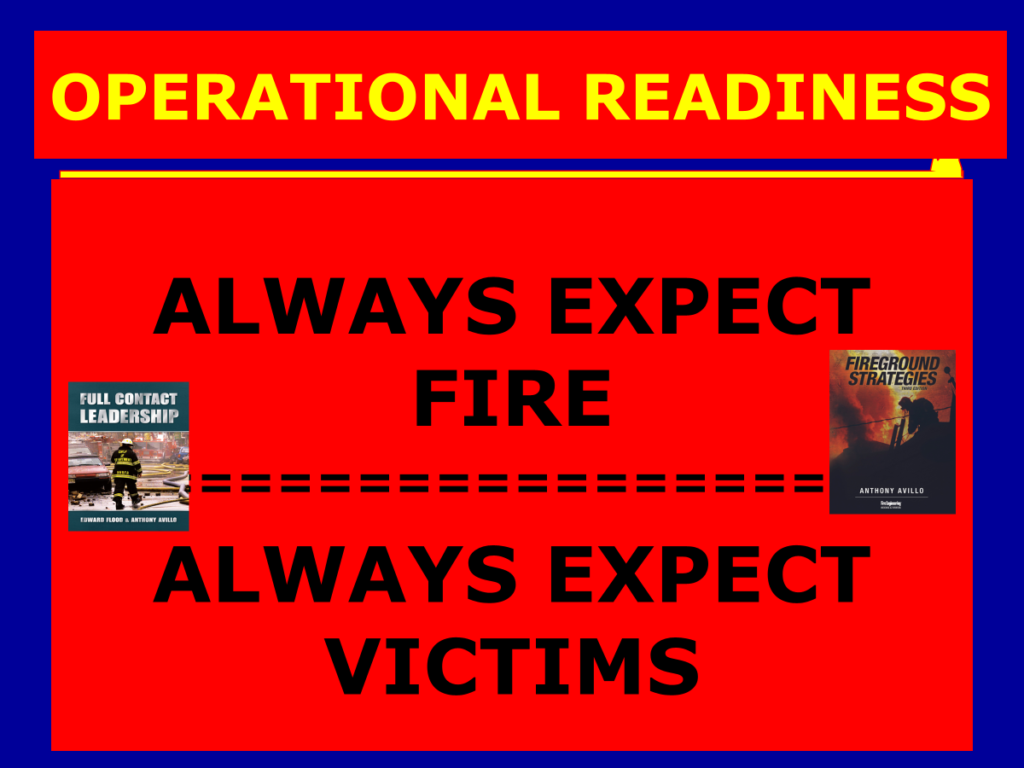
THE SLIDE BELOW IS THE MOST IMPORTANT ASPECT OF YOUR JOB!
